
The Treatment Compromise No One Talks About
Current Alzheimer’s medications force families into an impossible choice: accept doses too low to work, or endure side effects that destroy quality of life. For decades, this has been called ‘the best we can do.’ It’s time to challenge that.

How Current Treatments Work—And Where They Fall Short
Alzheimer’s disease disrupts communication between brain cells. One key player in that communication is acetylcholine, a neurotransmitter essential for memory, learning, and attention. In Alzheimer’s patients, acetylcholine gets broken down too quickly by an enzyme called acetylcholinesterase (AChE).
Current FDA-approved medications—donepezil (Aricept), rivastigmine (Exelon), and galantamine (Razadyne)—work by inhibiting this enzyme. Block the enzyme, and acetylcholine sticks around longer, improving signal transmission between neurons.
The concept is sound. The execution is the problem.
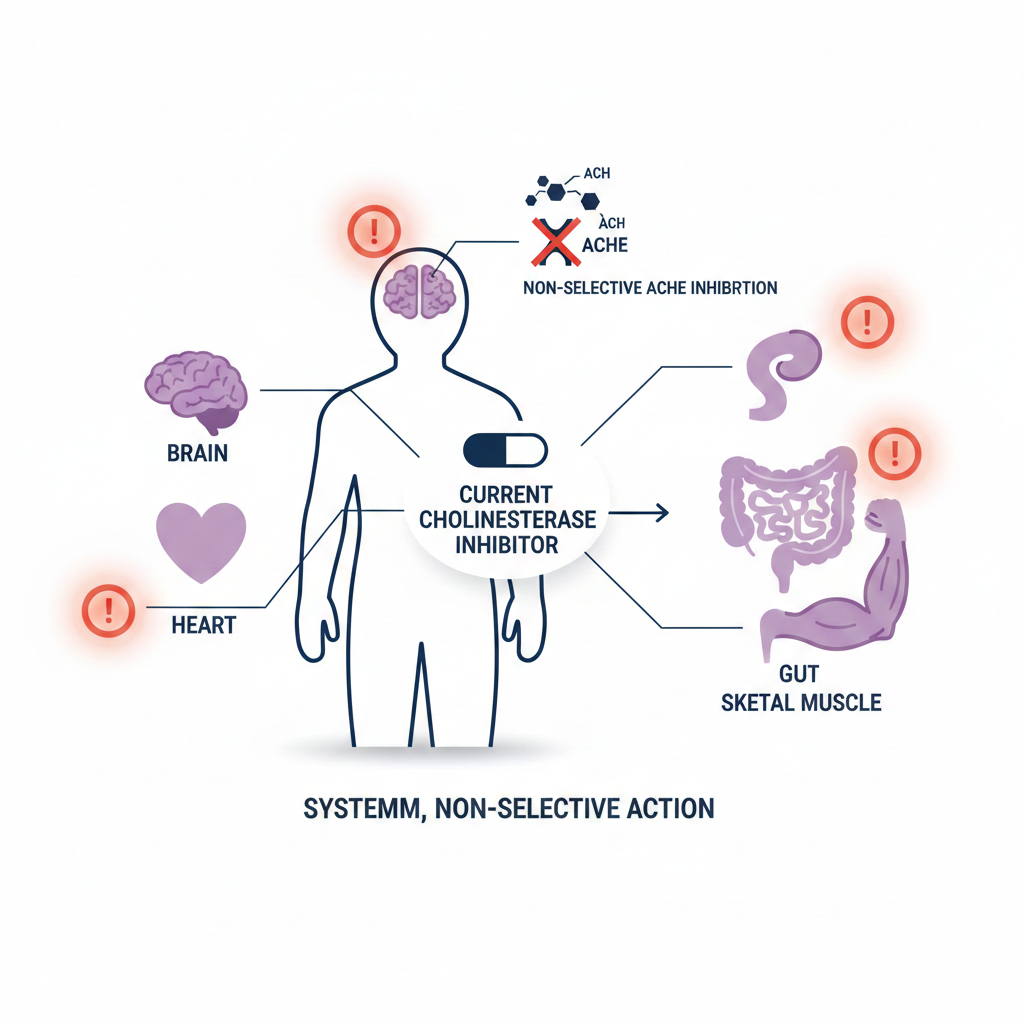
These drugs don’t distinguish between your brain and the rest of your body. They inhibit AChE everywhere—in your gut, your heart, your muscles. And that’s where the trouble starts.
Why 20% Isn’t Enough
Research suggests that meaningful cognitive benefit requires 60-80% inhibition of acetylcholinesterase in the brain. But at the maximum doses most patients can tolerate, current medications achieve only 20-40% inhibition.
Why can’t we just increase the dose?
Because these drugs don’t stay in the brain. They flood the entire body, and higher doses bring a cascade of side effects: nausea, vomiting, diarrhea, dangerous drops in heart rate, muscle cramps, and sleep disturbances. For many patients, these effects are severe enough to force dose reductions or discontinuation entirely.
This is the Sub-Clinical Gap—the space between what’s tolerable and what’s therapeutic. It’s where most Alzheimer’s patients are stuck today.
60-80% inhibition is needed for meaningful benefit. Most patients achieve less than half that.
What the Numbers Don’t Show
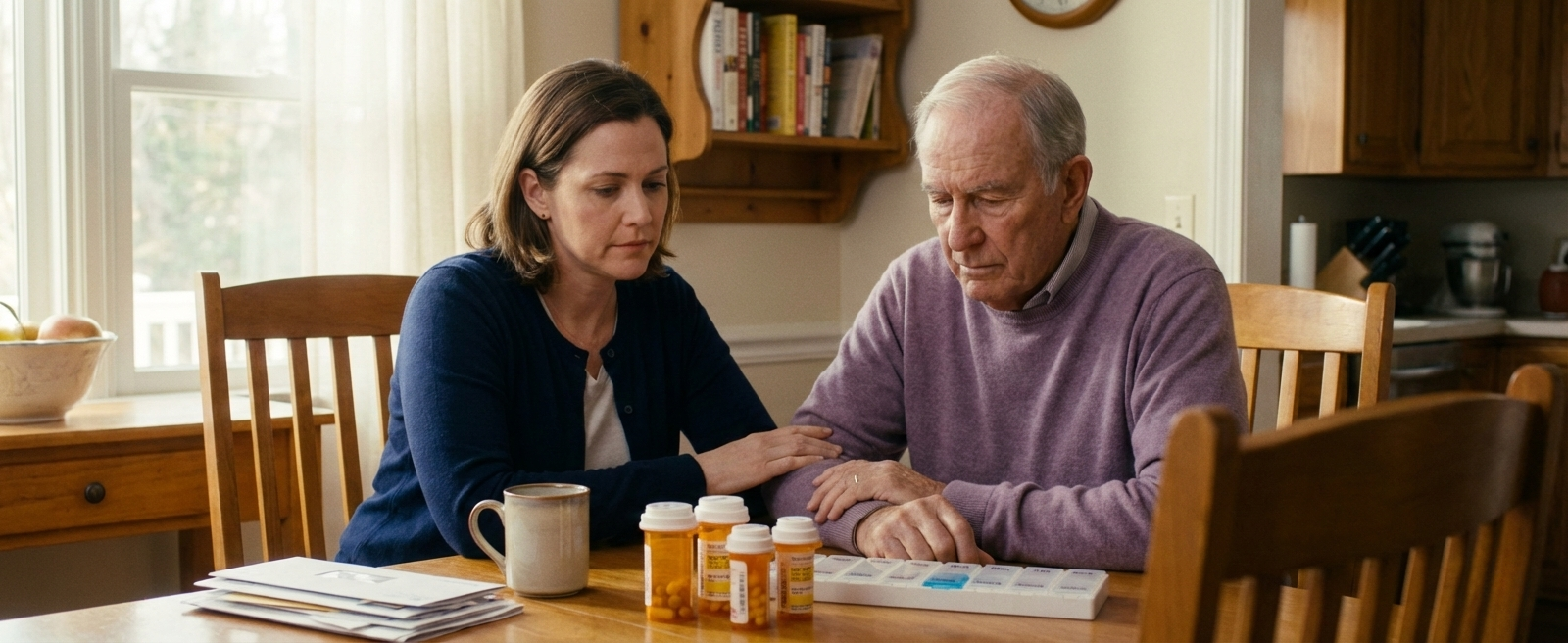
Behind every statistic is a family making impossible calculations. A spouse watching their partner decline while being told the medication is “working as expected.” An adult child wondering whether the nausea and fatigue their mother endures is worth the uncertain benefit. A patient who stops taking their pills because feeling sick every day isn’t living.
The Sub-Clinical Gap isn’t just a pharmacological problem. It’s a human one.
Families are told to manage expectations. To accept that current treatments might slow decline by a few months—if side effects don’t force discontinuation first. To be grateful for what exists, even when what exists isn’t enough.
We believe families deserve better than managed expectations.
New Treatments, Same Trade-Offs
X
X
X
X
Logistical Burden: Requires IV infusions every two weeks at specialized medical centers.
Financial Barrier: Costs $26,000+ per year, excluding infusion and mandatory monitoring fees.
Safety Risks: Up to 35% of patients experience ARIA (brain swelling or microbleeds).
Accessibility Gap: Requires regular MRI monitoring and proximity to metropolitan health hubs.
The need remains: an effective, tolerable, affordable oral treatment that achieves therapeutic levels in the brain without systemic toxicity.
That treatment exists.
There Is Another Way
CNS-selective therapeutics offer what legacy treatments cannot: the ability to reach therapeutic inhibition levels in the brain while sparing the rest of the body. The science is here. The path forward is clear.